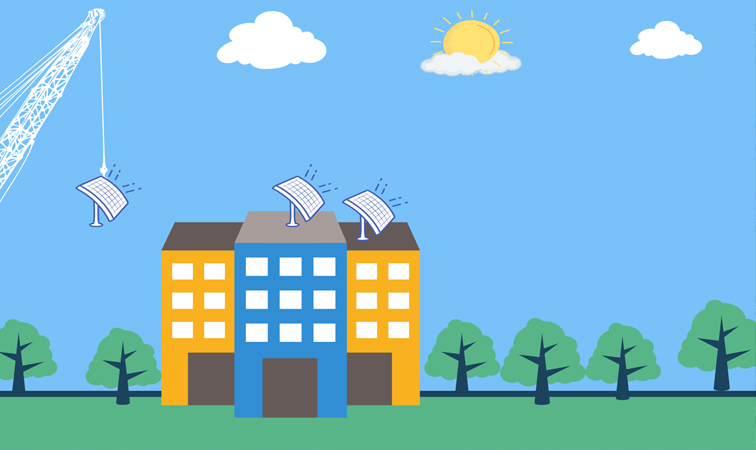
Why practice sustainability?
It nearly takes 1.7 Earths to fulfil the demands of the present human population of about 7.62 billion. This means we are ecologically deficit and stealing from the future. In other words, we need 70% more Earth than we have, to sustain this economy. In the early 1970s, two scientists Ehrlich and Holdren first calculated the impact of human activities on the planet. They formulated an equation called the IPAT equation to understand the multidimensional impacts on the environment (I) due to population explosion (P), human consumption habits (A) and, the types of technologies used (T). The IPAT equation, although simple, manifests the complex interrelations between economic progress and technological advancements. It clearly explains how increasing population, increases the level of consumption resulting in more waste generation, caused due to transforming/processing raw resources to final consumable products. The one degree war plan, by Randers and Gilding, suggests that we implement a global crisis plan to reduce the emission of greenhouse gases, in order to achieve a more sustainable, non-ecologically deficit world. As one of the largest of the world economy, the construction industry by nature is one of the biggest consumers of natural resources. Hence, the industry must make some minor and major steps towards a greener future. With a net-zero carbon vision, the industry is gradually adopting some sustainable construction practices.

What is sustainable construction and how does it benefit the industry?
Sustainable construction is the practice of using renewable, recyclable resources and materials when building structures, along with designing spaces that have reduced energy consumption and waste generation. Also, it includes redevelopment and retrofitting of already existing infrastructure. All in all, it is the use of innovative methods to benefit the environment and the industry at large. The sustainable construction practices seem expensive from a far off view. However, it is quite the opposite, as these construction methods cut the production cost by using reusable and recycled materials to earn a higher return on investment value. In simple words, these methods save more in long term by cutting down the expenses on electrical energy, water and more. The benefits of green buildings are being recognized globally and the green building market is anticipated to grow rapidly worldwide in coming years. The governments too encourage such practices by providing offers and reimbursements for green projects. The Indian government’s Ministry of Environment, Forest and Climate Change (MoEFCC) provides fast track environmental clearance for green buildings precertified by the Indian Green Building Council (IGBC). Multiple state governments, including the governments of Rajasthan, Gujarat, Maharashtra, Tamil Nadu, Uttar Pradesh, Andra Pradesh, Himachal Pradesh, Haryana and more, offer subsidies and reimbursements to projects rated as silver, gold and platinum by the IGBC.
Some sustainable construction practices
Here are a few ways towards a greener built environment:
- Cement Alternative: Since cement production contributes to global warming. One can opt for alternative/supplementary cementitious materials like fly ash, ground granulated blast furnace slag (GGBFS), rice husk etc ash which are generally waste byproducts of power stations and more.
- Use of wood: properly managed and maintained forests provide building material and also offer habitat for wildlife.
- Alternative bricks: bricks made out of wool, fly ash and even cigarette butts can be made without the need for high emission kilns fires.
- Variety of building blocks: 1. Autoclaved Aerated Concrete (AAC) blocks are lightweight, fire-resistant, mould resistant as well as energy-efficient due to their high thermal insulation property, they are also helpful in reducing solid waste as they are easy to cut precisely and they have reduced manufacturing carbon emissions. 2. Biocomposite blocks created from plant materials such as hemp, mushroom and rice straws, capture and lock in emissions helping to reduce global warming. 3. Hollow concrete blocks are having a hollow core, are lightweight and provide thermal insulation. 4. Permeable concrete blocks used as paving material, with high porosity help replenish groundwater as they let the water drain into the soil.
- Recycled metals: waste metals can be recycled and modified to make building materials such as window bars, grilled doors and staircase handrails etc.
- Green Paints: Since paints react with sunlight to emit harmful chemical compounds like volatile organic compounds (VOCs) which are toxic and the primary contributors of smog generation. One can opt for green paints that have low VOCs.
- Sustainable glass panels: These are recyclable glass panels that reduce heat gain inside buildings, provide thermal insulation, filter harmful UV rays, also offer acoustic insulation and are aesthetically pleasing.
- Recycled concrete aggregates: They are derived from crushed concrete from the debris of demolished structures. And can be utilized to produce concrete.
- Harvesting, storing and recycling water: Rainwater can be collected using rainwater harvesting methods and the water can be used for gardening, flushing and more.
- Prefabrication and precasting: fabrication of building elements in controlled environments can save a lot of energy and help manage waste produced. Precast walls and structural components conserve time, money and energy.
- Green concrete: Concretes that use 0% cement such as Geopolymer concrete, can be used in precast and skilled workmanship settings to eliminate excess carbon dioxide emissions.
- Digitalization: use of digital tools such as Building Information Modelling (BIM), Geographic Information Systems (GIS), advanced surveying technology such as drones, total stations, digital meters etc can reduce errors and multiple reworks that can save a lot of material resources, time and money. Even project management tools help keep track of labour, time and monetary resources that can help cut unnecessary material wastage and expenses.
Here’s how AGC INDIA promotes sustainable construction practices
- We encourage the use of M-sand and P-sand instead of river sand to reduce the impact of sand mining on depleting riverbeds that cause unprecedented flood situations. You can read more about it Here is why M-sand and P-sand is better
- We also advocate the use of Hollow concrete blocks, which are extremely beneficial for thermal insulation and reduces the dependency on air conditioning, resulting in lower energy consumption and cutting down costs.
- We promote building practices that reduce unnecessary material wastages, such as cutting on plasterwork beneath the false ceiling/ cornice to make building projects more cost-effective for our customers and environmentally friendly.
- We use construction management tools and strategies to eliminate reworks, schedule activities and manage resources which reduce the overall cost of the projects.
At AGC INDIA we plan to build a better greener future. Get our free consultation and have a look at our project packages, Click Here
Sources and References